I was asked to recap the "Dirty Dozen" list - fruits and vegetables with the highest amounts of pesticides. I buy organic produce whenever I can, and recommend this practice for the families I see, as well. I will also choose local produce whenever it is available at farms and farmers' markets. Statistically, these have been shown to be lower in pesticide residue as well.
Here is the list based on 2012 studies:
1. Apples - not a surprise, they are usually high on the list every year; apples are also notorious for being loaded with bacteria on their exterior surface as well; organic apples are easy to find - please buy those :)
2. Celery - a surprise for me; can't say I see much organic celery or find it often at the farmer's markets
3. Strawberries - usually a good local find for many people; I love picking my own at the local farms when I can
4. Peaches
5. Spinach - yes, it is a great thing to eat; obviously buy organic if you can
6. Nectarines
7. Imported grapes - interestingly, domestic grapes didn't make the list - shop accordingly
8. Sweet (red) bell peppers
9. Potatoes - a little surprise, evidently they absorb pesticides that are applied after harvest; peel and cook them to minimize risks
10. Domestic blueberries - another fruit that I never buy unless it is organic/local
11. Lettuce
12. Kale - see comments for spinach above
The normal rule of thumb for any produce is this - any fruit or vegetable that is eaten raw with the peel intact exposes you to pesticide residue. Wash all produce well, and buy organic when you can. I can now find organic bananas at my local grocery store, and even though bananas are seldom on the list, I buy those now. The price difference between organic and nonorganic is pretty small in most cases.
Wednesday, February 27, 2013

Wednesday, February 13, 2013
Store Brand Infant Formulas - "Are they just as good?"
The short answer is: yes, they are -- according to recent studies comparing store brand formula with the name brand competitors.
Store brand formulas are manufactured primarily by Perrigo Nutritionals - they produce more than 50 different global infant formulas, including those offered by major chains WalMart, Target, Babies R'Us and others (see the list below). These formulas are made at the company's Vermont and Ohio facilities - both ISO (International Standards Organization) certified. Perrigo Nutritionals is 1 of only 4 FDA inspected US Infant Formula Manufacturers. This means that they have a quaility management system in place that demonstrates consistent conformity to guidelines. I recently read that there are over 2300 safety and quality checks performed per batch of formula.
The FDA published regulations in 1971 regarding minimal concentrations of vitamins and minerals necessary for each infant formula. An amendment in 1980 called the Infant Formula Act allowed the FDA to establish quality control procedures for the manufacturing of formula, as well as regulate labelling.
As pediatricians, we strongly recommend breastfeeding as the best nutritional support for infants, but realize parents make choices regarding supplementing or switching to formula. It is never a good idea to "water down" formula to make the can last longer; if cost is an issue, I definitely advise patients to switch to store brand formulas.
Store brand infant formulas and their designations:
WalMart - Parent's Choice
Toys R'Us - Babies R'Us
Target - Up and Up
Sams Club - Simply Right Baby Care
Kroger - Comforts for Baby
Walgreens - Walgreens
CVS Pharmacy - CVS Pharmacy
Rite Aid Pharmacy - Rite Aid Tugaboos
Store brand formulas and the brand name equivalents:
Premium formula = Enfamil Premium
Advantage formula = Similac Advance
Tender formula = Gerber Good Start Gentle
(has partially digested whey protein - to address fussiness/gas issues)
Gentle formula = Enfamil Gentlease
(has partially digested whey protein - to address fussiness/gas issues)
Sensitivity formula = Similac Sensitive
(has low lactose for babies with lactose intolerance)
Soy-based formula = Enfamil Prosobee or Similac Isomil
(soy protein instead of cow's milk protein)
Added rice formula = Enfamil AR
(added rice starch designed to aid babies with reflux)
Organic formula = Similac Advance Organic
(certified organic by USDA)
Toddler formula = Similac Go and Grow, Enfagrow Premium Toddler
Newborn formula = Enfamil Premium Newborn
Store brand formulas are manufactured primarily by Perrigo Nutritionals - they produce more than 50 different global infant formulas, including those offered by major chains WalMart, Target, Babies R'Us and others (see the list below). These formulas are made at the company's Vermont and Ohio facilities - both ISO (International Standards Organization) certified. Perrigo Nutritionals is 1 of only 4 FDA inspected US Infant Formula Manufacturers. This means that they have a quaility management system in place that demonstrates consistent conformity to guidelines. I recently read that there are over 2300 safety and quality checks performed per batch of formula.
The FDA published regulations in 1971 regarding minimal concentrations of vitamins and minerals necessary for each infant formula. An amendment in 1980 called the Infant Formula Act allowed the FDA to establish quality control procedures for the manufacturing of formula, as well as regulate labelling.
As pediatricians, we strongly recommend breastfeeding as the best nutritional support for infants, but realize parents make choices regarding supplementing or switching to formula. It is never a good idea to "water down" formula to make the can last longer; if cost is an issue, I definitely advise patients to switch to store brand formulas.
Store brand infant formulas and their designations:
WalMart - Parent's Choice
Toys R'Us - Babies R'Us
Target - Up and Up
Sams Club - Simply Right Baby Care
Kroger - Comforts for Baby
Walgreens - Walgreens
CVS Pharmacy - CVS Pharmacy
Rite Aid Pharmacy - Rite Aid Tugaboos
Store brand formulas and the brand name equivalents:
Premium formula = Enfamil Premium
Advantage formula = Similac Advance
Tender formula = Gerber Good Start Gentle
(has partially digested whey protein - to address fussiness/gas issues)
Gentle formula = Enfamil Gentlease
(has partially digested whey protein - to address fussiness/gas issues)
Sensitivity formula = Similac Sensitive
(has low lactose for babies with lactose intolerance)
Soy-based formula = Enfamil Prosobee or Similac Isomil
(soy protein instead of cow's milk protein)
Added rice formula = Enfamil AR
(added rice starch designed to aid babies with reflux)
Organic formula = Similac Advance Organic
(certified organic by USDA)
Toddler formula = Similac Go and Grow, Enfagrow Premium Toddler
Newborn formula = Enfamil Premium Newborn
Tuesday, February 12, 2013
Treating Iron Deficiency Anemia
Iron deficiency is still on the list as a cause of anemia in children, though we see it somewhat less often than we did 10-20 years ago. Typically children with iron deficiency anemia present at 9 months - 2 years of age, the toddler transition period in which some of them drink large amounts of milk (which interferes with iron absorption) or do not adjust well to a solid/table food diet that has adequate amounts of iron. A second "peak" age for iron deficiency is noted in teenagers, particulary in teenage girls, whose menstrual cycles can be a source of blood loss coupled with a poor, low iron diet. I recently read an article about iron deficiency in teens that touted the effectiveness of iron-fortified breakfast cereals as a source of iron. Many teenagers may be willing to eat breakfast cereal several times a day, as opposed to taking oral iron tablets. I have included a list of cereals below.
Oral iron medication can be pretty distasteful, so much of our education in the office is spent stressing foods that either help iron absorption or foods that contain large amounts of iron. For some "picky" children, this can sometimes be difficult. Teenagers may be able to tolerate oral iron tablets, but can sometimes forget to take the medication. In this group of patients, discussing iron-rich foods is again an important aspect of treatment.
Iron deficiency may be suspected if a child's hemoglobin or hematocrit are low, and a dietary history is suggestive. If a complete blood count (CBC) is done, the Mean Corpuscular Volume (MCV) will typically be low in iron deficiency, and the Mean Cell Hemoglobin Concentration (MCHC) may also be low. The Red Cell Distribution Width (RDW), which measures the span of red cell size in circulation will typically be high in iron deficiency. If further labwork is done to confirm iron deficiency, your provider will typically measure an iron level, as well as transferrin, ferritin and iron percent saturation.
In iron deficiency, oral iron therapy will stimulate new red cell formation in 5-7 days. Some providers will check a reticulocyte count (which measure the amount of new red blood cells) to confirm the benefit of therapy. Once someone has been on iron therapy for a month, a repeat blood count can be done (or the more complete CBC - as mentioned above). Iron therapy is usually continued for a minimum of 3 months.
FOOD SOURCES OF IRON
GOOD - raisins, dried fruits, potatoes with skin, tomato juice
BETTER - oatmeal and breakfast cereals, beans, nuts and nut butters, bread, pasta, cooked spinach, eggs
BEST - beef, fish and shellfish, pork, chicken and turkey
FOODS THAT AID IN IRON ABSORPTION
Foods with Vitamin C can increase the absorption of iron; eat these foods along with iron-rich foods to increase your body's ability to absorb iron
bell peppers, mango, tangerine, oranges and orange juice, papaya, grapefruit, strawberries, broccoli, melon, green leafy vegetables, tomatoes, cabbage
FOODS THAT INTERFERE WITH IRON ABSORPTION
Some foods block iron absorption, and should be eaten at seperate times from iron supplements or iron-rich foods.
milk, cheese, yogurt, coffee, tea, chocolate, blueberries, grapes, popcorn, tofu
IRON-RICH BREAKFAST CEREALS
The list of the best cereals based on milligrams of iron present per serving:
General Mills - Total and Total corn flakes, Total raisin bran and cranberry crunch, all Chex (corn, rice, honey nut, multi-bran, frosted), Cheerios yogurt burst or multigrain, Kix
Kellogg's - Crispix, Frosted Mini-wheats, All Bran complete wheat flakes, Product 19, Complete oat bran flakes, Smart Start, Rice Krispies, Shredded Wheat
Malt-O-Meal Puffed Wheat, Puffed Rice, Frosted Mini Spooners, Crispy Rice, Honey Graham Squares, Toasty O's
Kashi Mighty Bites, honey crunch
In my practice, I routinely give patients with iron deficiency a handout with the above foods and cereals listed. In most cases, changing one's diet can treat iron deficiency effectively without the need for iron medication.
Oral iron medication can be pretty distasteful, so much of our education in the office is spent stressing foods that either help iron absorption or foods that contain large amounts of iron. For some "picky" children, this can sometimes be difficult. Teenagers may be able to tolerate oral iron tablets, but can sometimes forget to take the medication. In this group of patients, discussing iron-rich foods is again an important aspect of treatment.
Iron deficiency may be suspected if a child's hemoglobin or hematocrit are low, and a dietary history is suggestive. If a complete blood count (CBC) is done, the Mean Corpuscular Volume (MCV) will typically be low in iron deficiency, and the Mean Cell Hemoglobin Concentration (MCHC) may also be low. The Red Cell Distribution Width (RDW), which measures the span of red cell size in circulation will typically be high in iron deficiency. If further labwork is done to confirm iron deficiency, your provider will typically measure an iron level, as well as transferrin, ferritin and iron percent saturation.
In iron deficiency, oral iron therapy will stimulate new red cell formation in 5-7 days. Some providers will check a reticulocyte count (which measure the amount of new red blood cells) to confirm the benefit of therapy. Once someone has been on iron therapy for a month, a repeat blood count can be done (or the more complete CBC - as mentioned above). Iron therapy is usually continued for a minimum of 3 months.
FOOD SOURCES OF IRON
GOOD - raisins, dried fruits, potatoes with skin, tomato juice
BETTER - oatmeal and breakfast cereals, beans, nuts and nut butters, bread, pasta, cooked spinach, eggs
BEST - beef, fish and shellfish, pork, chicken and turkey
FOODS THAT AID IN IRON ABSORPTION
Foods with Vitamin C can increase the absorption of iron; eat these foods along with iron-rich foods to increase your body's ability to absorb iron
bell peppers, mango, tangerine, oranges and orange juice, papaya, grapefruit, strawberries, broccoli, melon, green leafy vegetables, tomatoes, cabbage
FOODS THAT INTERFERE WITH IRON ABSORPTION
Some foods block iron absorption, and should be eaten at seperate times from iron supplements or iron-rich foods.
milk, cheese, yogurt, coffee, tea, chocolate, blueberries, grapes, popcorn, tofu
IRON-RICH BREAKFAST CEREALS
The list of the best cereals based on milligrams of iron present per serving:
General Mills - Total and Total corn flakes, Total raisin bran and cranberry crunch, all Chex (corn, rice, honey nut, multi-bran, frosted), Cheerios yogurt burst or multigrain, Kix
Kellogg's - Crispix, Frosted Mini-wheats, All Bran complete wheat flakes, Product 19, Complete oat bran flakes, Smart Start, Rice Krispies, Shredded Wheat
Malt-O-Meal Puffed Wheat, Puffed Rice, Frosted Mini Spooners, Crispy Rice, Honey Graham Squares, Toasty O's
Kashi Mighty Bites, honey crunch
In my practice, I routinely give patients with iron deficiency a handout with the above foods and cereals listed. In most cases, changing one's diet can treat iron deficiency effectively without the need for iron medication.
Wednesday, December 12, 2012
Toilet Training Tips for Success
Toilet training can be a prolonged and frustrating experience for both parents and children.
Most children potty-train by 3 years of age, with an average training time of 6-7 months. Daytime continence (urinating in the toilet) with dry pull-ups or underwear precedes night-time continence. Most of the developmental skills necessary for toilet training success begin at about 2 years of age. Certain physiologic signs should be present before successful training: voluntary bladder control (usually starts at 12-18 months), awareness of urge to go (15-24 months) and ability to maintain dryness for more than a 2 hr period (usually 25-30 months). Children should be able to follow commands and communicate that their diaper is wet/dirty. Children with developmental delays may need extra time/attention especially if communication skills are an issue. Children also need the motor skills necessary to get to the bathroom, remove their clothing and sit on a potty chair or the toilet. In the early stages, a child will also need to understand what the potty is for; imitating or watching adults or older siblings go the the bathroom is useful. Some children continue to need pull-ups at night until 5-6 years of age, so being completely dry at night is not necessary to begin the toilet-training process.
Toilet training may begin when children start to show readiness and interest, either by imitating adults or by attempting to remove soiled or dirty diapers. This may begin anywhere between 18-24 months; however, some 2 year old children are not showing readiness signs, and shouldn't be pushed. Buying a potty chair and talking about the potty can occur, and children can "practice" by sitting on the chair fully clothed, then with pants off and only wearing a diaper, etc. when the parents are using the bathroom. This imitation of parent activity can be a positive and enjoyable experience for kids. As children develop urge, it is important to notice this and associate urge with voluntary release of urine or stool. Constipation is a frequent issue with children, especially at toilet training age, and can definitely interfere with the toilet-training process. Family pressure and stress, a change in environment, new baby in the family, or a change in family dynamics may retard the process.
Tips:
1. Focus on ownership of the process - recognize what skills your child has and what they can do. Start with small steps and work up as children show success. For example, take off dirty diapers in the bathroom, have the child help with clean up/new diaper. Once this is established, you can work up to potty-sitting (with or without a diaper) if the child is not resistant.
2. Eliminate stress - talk about the potty, make it a positive experience and don't push; if a child shows regression (was previously interested, now is not) - back off, put them back in diapers or pull-ups and try again in a few weeks. You can still have them come in the bathroom with you or talk about peeing/pooping, even if they won't participate.
3. Schedule potty time - regular times that your child can sit on the potty with or without actually going; the gastrocolic reflex leads most people to go 30 min. after a meal. Sitting time should be about 10 min.
4. Reward systems work - star charts, M and Ms, stickers, etc. Have the chart in the bathroom and reward kids for sitting on the potty - even if they do not actually go. Heap praise on your child when he does go in the potty. Talk about how proud you are of them learning to go potty.
5. Stay positive, and be flexible - adjust tactics if needed, and don't get discouraged for children who regress or take longer
6. Address constipation and stool withholdiing if this interferes with the process. For many children, constipation needs to resolve before they can truly have good urinary continence. Address constipation issues with your child's medical provider.
7. Seek out books that are age-appropriate that discuss children learning to go potty. Point to the pictures, and talk about what is going on. This will reinforce the normalcy of the process, and repetition will breed comfort with the activity of sitting on the toilet.
Most children potty-train by 3 years of age, with an average training time of 6-7 months. Daytime continence (urinating in the toilet) with dry pull-ups or underwear precedes night-time continence. Most of the developmental skills necessary for toilet training success begin at about 2 years of age. Certain physiologic signs should be present before successful training: voluntary bladder control (usually starts at 12-18 months), awareness of urge to go (15-24 months) and ability to maintain dryness for more than a 2 hr period (usually 25-30 months). Children should be able to follow commands and communicate that their diaper is wet/dirty. Children with developmental delays may need extra time/attention especially if communication skills are an issue. Children also need the motor skills necessary to get to the bathroom, remove their clothing and sit on a potty chair or the toilet. In the early stages, a child will also need to understand what the potty is for; imitating or watching adults or older siblings go the the bathroom is useful. Some children continue to need pull-ups at night until 5-6 years of age, so being completely dry at night is not necessary to begin the toilet-training process.
Toilet training may begin when children start to show readiness and interest, either by imitating adults or by attempting to remove soiled or dirty diapers. This may begin anywhere between 18-24 months; however, some 2 year old children are not showing readiness signs, and shouldn't be pushed. Buying a potty chair and talking about the potty can occur, and children can "practice" by sitting on the chair fully clothed, then with pants off and only wearing a diaper, etc. when the parents are using the bathroom. This imitation of parent activity can be a positive and enjoyable experience for kids. As children develop urge, it is important to notice this and associate urge with voluntary release of urine or stool. Constipation is a frequent issue with children, especially at toilet training age, and can definitely interfere with the toilet-training process. Family pressure and stress, a change in environment, new baby in the family, or a change in family dynamics may retard the process.
Tips:
1. Focus on ownership of the process - recognize what skills your child has and what they can do. Start with small steps and work up as children show success. For example, take off dirty diapers in the bathroom, have the child help with clean up/new diaper. Once this is established, you can work up to potty-sitting (with or without a diaper) if the child is not resistant.
2. Eliminate stress - talk about the potty, make it a positive experience and don't push; if a child shows regression (was previously interested, now is not) - back off, put them back in diapers or pull-ups and try again in a few weeks. You can still have them come in the bathroom with you or talk about peeing/pooping, even if they won't participate.
3. Schedule potty time - regular times that your child can sit on the potty with or without actually going; the gastrocolic reflex leads most people to go 30 min. after a meal. Sitting time should be about 10 min.
4. Reward systems work - star charts, M and Ms, stickers, etc. Have the chart in the bathroom and reward kids for sitting on the potty - even if they do not actually go. Heap praise on your child when he does go in the potty. Talk about how proud you are of them learning to go potty.
5. Stay positive, and be flexible - adjust tactics if needed, and don't get discouraged for children who regress or take longer
6. Address constipation and stool withholdiing if this interferes with the process. For many children, constipation needs to resolve before they can truly have good urinary continence. Address constipation issues with your child's medical provider.
7. Seek out books that are age-appropriate that discuss children learning to go potty. Point to the pictures, and talk about what is going on. This will reinforce the normalcy of the process, and repetition will breed comfort with the activity of sitting on the toilet.
Monday, August 27, 2012
Hand, Foot and Mouth Disease - update
We are starting to see more local cases of Hand, Foot and Mouth disease, a viral illness usually caused by a virus called Coxsackie. Typically, summer and fall are the seasons in which we tend to see more Hand, Foot and Mouth disease. Several years ago, a more severe form of Coxsackie started showing up in various locations around the U.S, and this new variant was identified as "Coxsackie A6".
In the past, Coxsackie A6 patients with Hand, Foot and Mouth disease tended to be sicker and younger (63% less than 2 years old), with some children needing to be hospitalized. The classic rash of Hand, Foot and Mouth tends to be pink or red vesicles on the sides of fingers, hands, toes and feet. The hands are involved more often than the feet. Some children will have small red dots and vesicles on the back of their throat lateral to the tonsils or on the back of the palate.
The current cases we are seeing also have vesicles on the buttocks, lower legs and the perioral (around the mouth) area. These lesions around the mouth may be mistakenly diagnosed as impetigo (a bacterial skin infection).
Hand, Foot and Mouth disease is most common in children under the age of 5; in rare cases, older kids and adults can get it (I have seen parents and older school age children with cases in the last month). Most often, the disease is caused by coxsackie viruses, though a virus called enterovirus 71 can also cause a similar illness. In Asia, enterovirus 71 has caused a cluster of severe neurologic symptoms and encephalitis. Thankfully, what we see here in the U.S. is usually limited to rash and fever - sometimes the fever can be quite high.


Hand, Foot and Mouth disease has a short incubation period - usually about 4-6 days, and will resolve spontaneously in about a week. The virus is transmitted through contact with infected saliva, respiratory secretions, the skin vesicles themselves, or contact with stool of someone who has the infection.
You can prevent the spread of Hand, Foot and Mouth disease by:
covering coughs, washing hands often (especially after changing diapers), disinfecting dirty surfaces, and avoiding close contact such as kissing and sharing eating utensils with infected persons.
In the past, Coxsackie A6 patients with Hand, Foot and Mouth disease tended to be sicker and younger (63% less than 2 years old), with some children needing to be hospitalized. The classic rash of Hand, Foot and Mouth tends to be pink or red vesicles on the sides of fingers, hands, toes and feet. The hands are involved more often than the feet. Some children will have small red dots and vesicles on the back of their throat lateral to the tonsils or on the back of the palate.
The current cases we are seeing also have vesicles on the buttocks, lower legs and the perioral (around the mouth) area. These lesions around the mouth may be mistakenly diagnosed as impetigo (a bacterial skin infection).
Hand, Foot and Mouth disease is most common in children under the age of 5; in rare cases, older kids and adults can get it (I have seen parents and older school age children with cases in the last month). Most often, the disease is caused by coxsackie viruses, though a virus called enterovirus 71 can also cause a similar illness. In Asia, enterovirus 71 has caused a cluster of severe neurologic symptoms and encephalitis. Thankfully, what we see here in the U.S. is usually limited to rash and fever - sometimes the fever can be quite high.
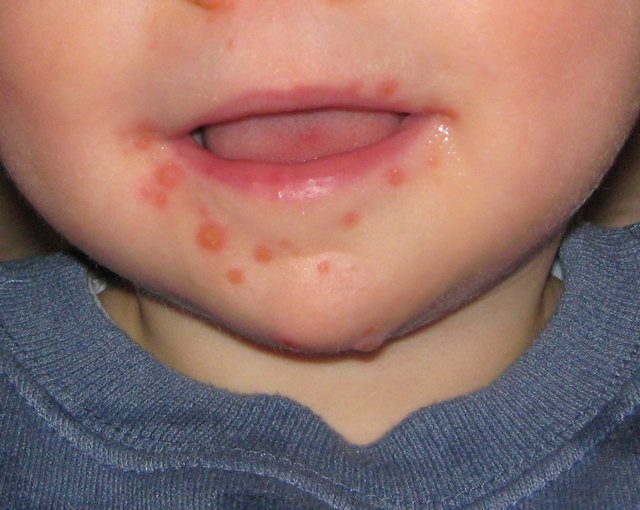

Hand, Foot and Mouth disease has a short incubation period - usually about 4-6 days, and will resolve spontaneously in about a week. The virus is transmitted through contact with infected saliva, respiratory secretions, the skin vesicles themselves, or contact with stool of someone who has the infection.
You can prevent the spread of Hand, Foot and Mouth disease by:
covering coughs, washing hands often (especially after changing diapers), disinfecting dirty surfaces, and avoiding close contact such as kissing and sharing eating utensils with infected persons.
Wednesday, July 25, 2012
Handling Childhood Emergencies - part 2
When to call 911: Conditions that require immediate attention
Child is unconscious or is choking/turning blue or struggling to breathe
A seizure that lasts longer than 5 minutes, or any seizure if your child has never had one before
Fall from a height of 10 feet or more, or if you child cannot move or talk following an injury. In this case, it is important not to move your child - wait for an ambulance to arrive.
Injury to an arm or leg with: bone protruding through the skin, limb is awkwardly bent or child cannot move the injured extremity.
Burns that are blistered, severely swollen or appear white or charred; any electrical burn
Uncontrolled bleeding from a wound; animal bite from a potentially rabid animal or bite accompanied by difficulty breathing
Fever with a stiff neck (possible meningitis)
Unexplained rash accompanied by shortness of breath or chest tightness
Severe vomiting or diarrhea and dehydration -- signs may include no urine output for several hours, no tears when crying, skin or lips look purple
When to call your pediatrician or doctor's office:
Child has mild asthma symptoms (shortness of breath or wheezing)
Seizure that lasts less than five minutes, if the child has had previous seizures
Fall from a relatively short distance - off playground equipment or down a short flight of stairs; child is conscious and can move/walk
Swelling, tenderness and pain at the site of an injury, but child can still move injured part
Burns with slight swelling or redness
Cuts that are more superficial, but not bleeding profusely; cat or dog bites with minor bleeding and no other symptoms
Unexplained rash without other symptoms
Vomiting and diarrhea without obvious signs of dehydration
Child is unconscious or is choking/turning blue or struggling to breathe
A seizure that lasts longer than 5 minutes, or any seizure if your child has never had one before
Fall from a height of 10 feet or more, or if you child cannot move or talk following an injury. In this case, it is important not to move your child - wait for an ambulance to arrive.
Injury to an arm or leg with: bone protruding through the skin, limb is awkwardly bent or child cannot move the injured extremity.
Burns that are blistered, severely swollen or appear white or charred; any electrical burn
Uncontrolled bleeding from a wound; animal bite from a potentially rabid animal or bite accompanied by difficulty breathing
Fever with a stiff neck (possible meningitis)
Unexplained rash accompanied by shortness of breath or chest tightness
Severe vomiting or diarrhea and dehydration -- signs may include no urine output for several hours, no tears when crying, skin or lips look purple
When to call your pediatrician or doctor's office:
Child has mild asthma symptoms (shortness of breath or wheezing)
Seizure that lasts less than five minutes, if the child has had previous seizures
Fall from a relatively short distance - off playground equipment or down a short flight of stairs; child is conscious and can move/walk
Swelling, tenderness and pain at the site of an injury, but child can still move injured part
Burns with slight swelling or redness
Cuts that are more superficial, but not bleeding profusely; cat or dog bites with minor bleeding and no other symptoms
Unexplained rash without other symptoms
Vomiting and diarrhea without obvious signs of dehydration
Handling Childhood Emergencies - part 1
Many parents feel ill-equipped to handle household injuries and emergencies. With some preparation and training, you can start to feel equipped and ready for some common emergencies that may happen in your household.
When emergencies happen, parents have to be ready to make quick decisions: whether to call 911 for emergency aid/ambulance, whether to take their child by car to an emergency room, or call their child's regular doctor for advise. If a child is not in a life-or-death situation, their physician's office should be able to see them sooner than an overwhelmed and busy emergency room. It is important to know, however, what the pediatrician's office can handle -- asthma flare-ups, injuries, etc. Most physicians are equipped to see you on a same day basis if the office is open, and give medications (like breathing treatments or steroids) and order X-rays if needed. Some doctors' offices do not do stitches, so if your child has a laceration that may need to be repaired, an urgent care center or emergency room is more appropriate. Find out the closest emergency room and urgent care center to your home, and which hospitals or after hours clinics your physician prefers. Once you know where to go, write down the directions and keep them easily accessible in your house.
When visiting an ER or urgent care center, be prepared to answer the following:
Proof of insurance coverage if any, regular doctors' name, address, phone number
Time of your child's last meal (in case anaesthesia is needed)
List of your child's medical conditions (if any), regular medications taken, and date of last tetanus shot
Consent form for someone else (grandparent, babysitter) to seek emergency care for your child; it should read "I hereby grant [name] permission to seek emergency medical help in the event that my child [name] is injured or otherwise in need of medical care. I will assume financial responsibility for treatment rendered during this time". This can be handwritten. Place a phone number (such as a cell number) where you can be reached if needed.
Emergency room physicians also like to remind parents to bring any medicine or cleaning substance that children have swallowed to the ER with them. In a panic, most parents forget this and then cannot recall exactly what their children have ingested.
It is wise to keep these written instructions together near the kitchen refrigerator or phone in case you need to grab them quickly.
A list of emergency numbers should also be posted by a central telephone, including: pediatrician's phone number, phone number for the local ER or after hours clinic, phone number for poison control.
The local poison control center can be invaluable in the case of an accidental ingestion, and can direct you in home treatment vs. the necessity for an emergency evaluation. Give poison control any specific information that you can - oftentimes, it is necessary to estimate how much a child has ingested, especially with medications.
When emergencies happen, parents have to be ready to make quick decisions: whether to call 911 for emergency aid/ambulance, whether to take their child by car to an emergency room, or call their child's regular doctor for advise. If a child is not in a life-or-death situation, their physician's office should be able to see them sooner than an overwhelmed and busy emergency room. It is important to know, however, what the pediatrician's office can handle -- asthma flare-ups, injuries, etc. Most physicians are equipped to see you on a same day basis if the office is open, and give medications (like breathing treatments or steroids) and order X-rays if needed. Some doctors' offices do not do stitches, so if your child has a laceration that may need to be repaired, an urgent care center or emergency room is more appropriate. Find out the closest emergency room and urgent care center to your home, and which hospitals or after hours clinics your physician prefers. Once you know where to go, write down the directions and keep them easily accessible in your house.
When visiting an ER or urgent care center, be prepared to answer the following:
Proof of insurance coverage if any, regular doctors' name, address, phone number
Time of your child's last meal (in case anaesthesia is needed)
List of your child's medical conditions (if any), regular medications taken, and date of last tetanus shot
Consent form for someone else (grandparent, babysitter) to seek emergency care for your child; it should read "I hereby grant [name] permission to seek emergency medical help in the event that my child [name] is injured or otherwise in need of medical care. I will assume financial responsibility for treatment rendered during this time". This can be handwritten. Place a phone number (such as a cell number) where you can be reached if needed.
Emergency room physicians also like to remind parents to bring any medicine or cleaning substance that children have swallowed to the ER with them. In a panic, most parents forget this and then cannot recall exactly what their children have ingested.
It is wise to keep these written instructions together near the kitchen refrigerator or phone in case you need to grab them quickly.
A list of emergency numbers should also be posted by a central telephone, including: pediatrician's phone number, phone number for the local ER or after hours clinic, phone number for poison control.
The local poison control center can be invaluable in the case of an accidental ingestion, and can direct you in home treatment vs. the necessity for an emergency evaluation. Give poison control any specific information that you can - oftentimes, it is necessary to estimate how much a child has ingested, especially with medications.
Subscribe to:
Posts (Atom)